A new year, a new space
We’re starting 2026 and I’ve decided this year I want a place to think out loud. A space to research, write, and share my thoughts on business, marketing, strategy, and, carefully, a bit of politics.
I don’t know exactly where this is going. But I do know where I want to start.
AI hit hard in 2025. And everything suggests 2026 is going to hit even harder. So let’s start there: with something that’s been catching my attention for weeks and that I think doesn’t get talked about clearly enough.
What many “AI companies” don’t tell you
We all know the big ones. Claude, ChatGPT, Gemini. But then there are the tools we use day to day: Gamma for presentations, Lovable for design, Jasper for marketing, dozens of customer service chatbots, apps to “chat with your PDF”…
What technology do these startups actually use? The question seems obvious but the answer surprises a lot of people.
Most of them don’t have their own AI. They use models from OpenAI, Anthropic, or Google, put a nice interface on top, and charge you $20 a month for something you could do yourself directly for less. They’re called wrappers. And according to CB Insights, 78% of AI startups launched in 2024 are exactly that.
Some examples you probably recognize:
Jasper reached $120 million in revenue being essentially OpenAI’s GPT with marketing templates. It’s now dropped to $55 million because ChatGPT does the same thing for free. The dozens of “chat with your PDF” apps charging $15 to $20 a month died overnight when ChatGPT integrated that feature natively. And hundreds of customer service chatbots that are nothing more than GPT-4 with a custom prompt and a logo on top.
The rule I find most useful for spotting them is simple: if the company would disappear tomorrow if OpenAI cut off their API access, they didn’t build a product. They built a prompt with a logo.
Not all of them are the same
That said, not all wrappers are equal. Cursor, Bolt, or Perplexity also use external models, but they’ve built something on top that you can’t easily replicate on your own. There’s a real layer of value, a user experience, an integration, a workflow that justifies the product beyond the model powering it.
The difference comes down to one very specific question: what happens if OpenAI ships that feature next week?
If the answer is “the product disappears,” there’s no product. If the answer is “we’re still relevant because we’ve built something more,” then there’s actually something there.
Even the experts contradict each other
And here’s the underlying problem. It’s not just that there are poorly built wrappers or startups with questionable business models. It’s that even the people who know the most don’t have a clear picture of where this is going.
AI-2027 is a scenario published by researchers close to the field that describes a radical transformation of civilization as we know it in under two years. It’s a serious document, put together by people who work in this space, and it’s deeply alarming.
Other equally serious experts consider it exaggerated. Some of the same people who have spent years in the field say we’re decades away from what AI-2027 describes.
Who’s right? I don’t know. And I don’t think anyone fully knows.
And that, precisely, is the problem.
The call to action nobody is making
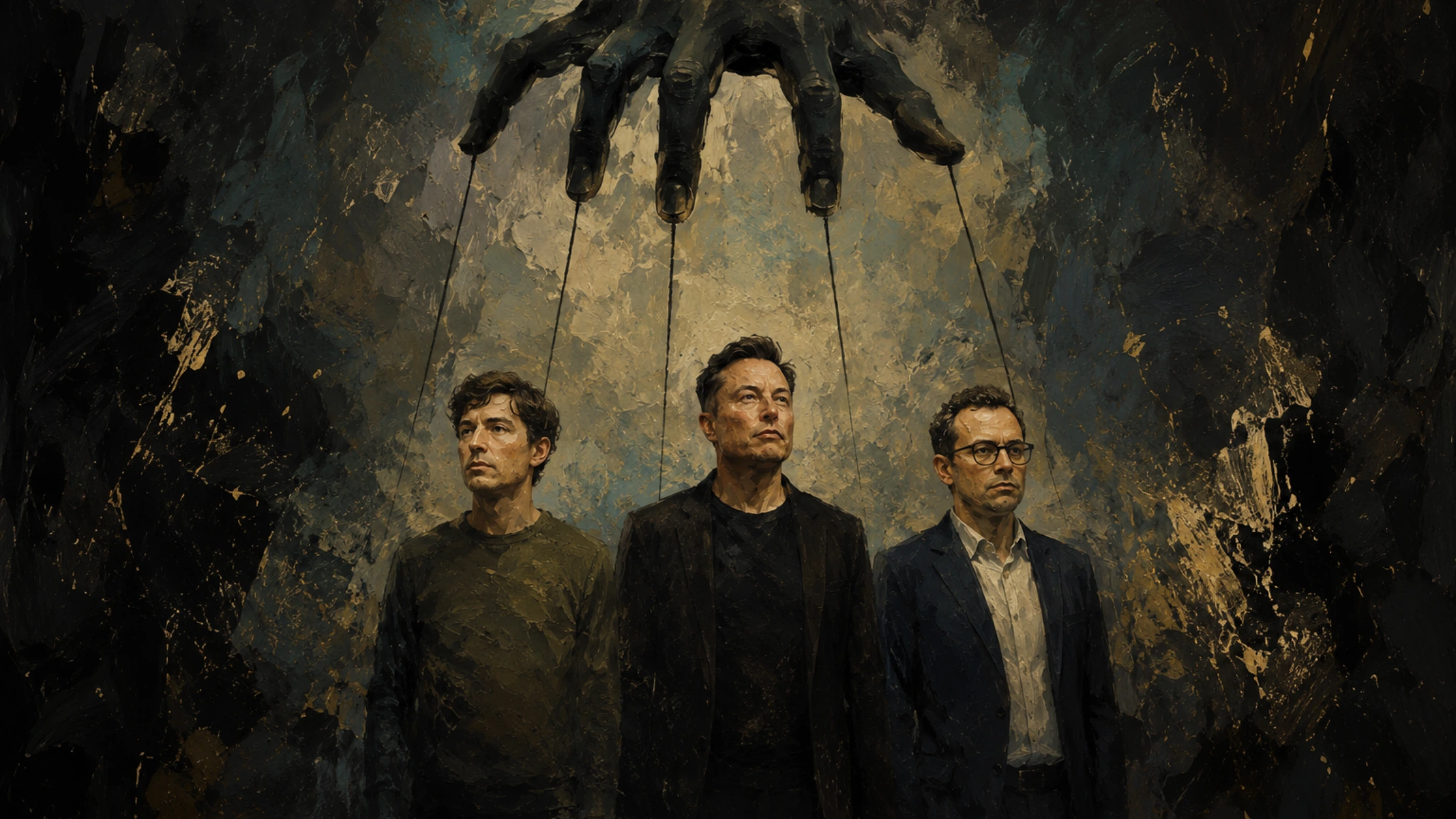
While Sam Altman, Elon Musk, and Dario Amodei take turns telling us what AI is going to do with our lives, we as a society remain in reactive mode. Waiting to see what gets thrown at us and then deciding whether we like it or not.
But the important decisions aren’t being made in referendums or parliaments. They’re being made in boardrooms and funding rounds.
I think 2026 is the year to start asking uncomfortable questions. Not as technology consumers, but as citizens. What do we want AI to do? What don’t we want? Who decides that? And why are we letting others decide for us?
I don’t have the answers. But I do think asking the questions is the first step.
Welcome to 2026.